Trail Gear Picks
Checklist

The Camping Checklist

Everything for a weekend at a campground, from the tent stakes to the can opener, with the things you can't forget marked.

By Alex Hart
Updated Oct 2026

We earn a commission if you buy through our Amazon links, at no extra cost to you. How this worksAmazon prices as of Nov 4, 10:16 PM ET, subject to change. Details

Car camping lists run long because the car carries everything. What matters is the short list of things a weekend goes wrong without, like a lighter for the stove or a headlamp for the walk back from the bathrooms. Those carry a dot below. Check things off as they go into the car; your checks stay in this browser, so you can pack over two evenings and come back to where you left off.

Where the lists disagree

A few lines are essential on some lists and optional on others. Here's where I landed, and why.

  • Water jug. Some lists only pack one when the campground has no drinking water. Bring it anyway. The faucet is often a walk away, and a jug at the table covers cooking, dishes and hand-washing for the weekend.
  • Footprint. It protects the tent floor from rocks and sticks, and a plain tarp does the same job. Light backpacking tents have thin floors, so it matters even more there; my picks for a solo backpacking tent say which ones need one. For the family tent itself, my 6-person tent guide covers the size most families of four buy.
  • Pillow and camp chair. Both sound like luxuries until the first night without them. The car has room, so take the pillow from your bed and a chair for each person.
  • Rain jacket. Pack it even when the forecast is clear. A shower at dinner is a long evening without one.
  • Cutting board and can opener. A multi-tool won't cut it as a kitchen knife, and a can opener weighs nothing in a car. Two boards keep raw meat away from everything else.
  • Sleeping bag rating. Pick a bag whose comfort rating is at or below the coldest night in the forecast. The number on the bag is often a lower limit, not where you'll sleep well.

Before you leave

Call or check the campground page before you pack, because the answers change the list. Is there drinking water? A fire pit and a picnic table? Are fires allowed this week? Is there cell service? Buy firewood near the campground instead of bringing it from home; many campgrounds only allow local or approved wood.

Cash helps when you pay for the campground after hours or buy firewood. Print or download the reservation, because you may not have a signal when you arrive. And if you're shopping for a camper rather than packing for yourself, here are the best camping gifts.

Cold nights and fall

Even a summer night can drop fast once the sun goes down; a 90-degree afternoon can turn into a night below 50. In fall, add these to the list:

  • A warmer sleeping bag than the forecast suggests, or two bags, and a pad that insulates from the ground, because the cold comes up from below.
  • Long underwear, a fleece hat for sleeping, gloves, and a warm jacket even if the forecast says mild.
  • A water bottle filled with hot water in the bottom of your sleeping bag.
  • More stove fuel. Cooking takes longer in the cold.
  • An early arrival. The days are short, and pitching a tent by headlamp is slow going.

If you bring a propane heater, use only one that's labeled for indoor use with automatic shutoffs, because of carbon monoxide.

Gear worth buying before your first trip

Black Diamond Spot 400
Our pickEveryone in the tent

Black Diamond Spot 400

The headlamp to pack first. It's bright enough for the walk to the bathrooms, has a red light that won't wake the tent, and runs on three AAA batteries you can buy anywhere.

$49.88$59.9517% off
Check price on Amazon

Every list has a headlamp, and every one that marks essentials marks it, because it's the first thing you need when you pull in after dark. The Spot 400 has a dimmer, a red mode that turns on without flashing white first, a battery gauge and a lock so it doesn't switch on in your bag. Tap the side and it jumps to full power, which is handy on the trail to the bathrooms. It's waterproof enough for a downpour and comes with a three-year warranty. For a rechargeable one or a lighter one for backpacking, see my guide to the best headlamps.

Flaws but not dealbreakers

  • The full-power tap goes off by accident, sometimes while you're tilting the lamp, and it dazzles whoever you're looking at. One reviewer did it more than once.
  • The buttons take a couple of evenings to learn. A longtime Black Diamond owner found them natural; another buyer called them fiddly.
  • One buyer had the plastic battery door break, and another found the run time on rechargeable batteries shorter than promised.
BioLite AlpenGlow 500
Best lanternLighting the picnic table

BioLite AlpenGlow 500

A rechargeable lantern that lights the whole table for dinner, dims to a candle-like flicker afterward and charges your phone from its own battery.

A headlamp is for walking; a lantern is for dinner, cards and the hour after. The AlpenGlow puts out up to 500 lumens, switches between cool white, warm white, a candle flicker and colors, and you change modes by shaking it. BioLite rates it at 5 hours on high and up to 200 on low, and a USB port lets it top up a phone.

Flaws but not dealbreakers

  • The modes take some figuring out the first night.
  • It charges over micro-USB, not USB-C, so bring the right cable.
  • It's a lot of money for a light. If all you need is light over the picnic table, a basic battery lantern does that for much less.
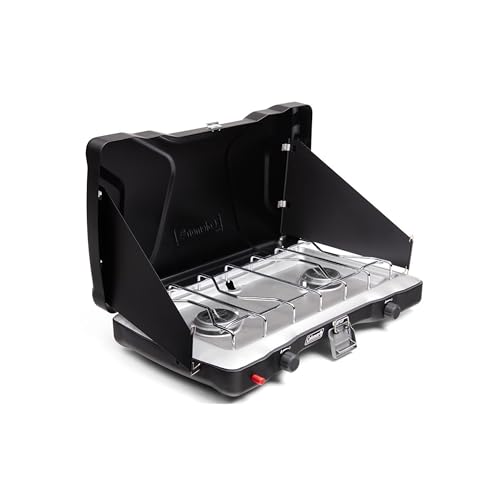
Coleman Triton+ 2-Burner Stove
Best stoveCooking real meals at camp

Coleman Triton+ 2-Burner Stove

Two burners and push-button lighting, so the coffee and the eggs cook at the same time, on the small green propane bottles every store sells.

Two burners mean the coffee and the eggs cook at once. The Triton+ lights with a button, the burners adjust separately, and the lid and side panels fold out into windscreens. Coleman rates it at about an hour on high per 16-ounce propane bottle, and reviewers praise how low it simmers. For more power, a grill or a single burner, see our best camping stoves.

Flaws but not dealbreakers

  • Wind is its weak spot. In OutdoorGearLab's 2016 test of the Triton+, a liter took about twice as long to boil in wind as in calm air.
  • Two 12-inch pans are a tight fit unless you open up the windscreens.
  • If you cook big meals for a group, Switchback and Fresh Off The Grid both prefer the bigger Camp Chef Everest 2X, at about twice the price.
Reliance Aqua-Tainer 7 Gallon (2-pack)
Best water jugWater at your site all weekend

Reliance Aqua-Tainer 7 Gallon (2-pack)

Seven gallons with a spigot at your picnic table, so dishes, hand-washing and bottle refills don't mean a walk to the faucet every hour.

This listing is a pair, which works out well: one jug for drinking water, one for dishes. The spigot tucks away for the drive, its cap reverses to seal it in transit, and the empty jugs stack in the garage. Reliance backs them for five years. One owner has used three of them daily for more than seven years.

Flaws but not dealbreakers

  • The spigot is the part that wears out. A heavy daily user saw each one crack after a year or two and replaced it for about $5. Spare spigots are sold separately.
  • Seven gallons of water weighs about 56 pounds. Fill it at the site if you can.
  • Reliance warns that long exposure to direct sun breaks down the plastic. Keep it in the shade.
Heading out on a day hike from camp?How to Pack a Backpack

How we picked

8 camping lists read109 items, 57 essentials4 products picked

I read the camping checklists from REI, Switchback Travel, Fresh Off The Grid, KOA, The Dyrt, AFAR and Bearfoot Theory, plus The Wilderness Society's fall list, and kept nearly every item at least one of them recommends for a campground weekend. I left out the Bluetooth speaker, which campers argue about. An item is marked essential when the lists mostly agree you'll miss it on the first night; the closest calls are explained above. The four products answer the essentials a first-time camper is least likely to own already, checked against the makers' pages and owner reviews. Prices come from Amazon and update on this page.

Common questions

What do I need for car camping?+

A tent with its stakes and a footprint, a sleeping bag and pad, a stove with fuel and a lighter, a cooler, water, a headlamp, warm layers and a rain jacket, a first-aid kit, and your reservation. The dots in the list above mark the 57 things that matter most.

How do I stay warm car camping?+

Insulate from the ground first, with a thick pad or a cot and a pad. Bring a sleeping bag rated at or below the coldest night in the forecast, and sleep in a hat, dry socks and long underwear. A bottle of hot water in the foot of the bag helps on a cold night.

Does the campsite have water?+

Many campgrounds do, but the faucet may be a walk from your site. Check the campground page before you go, and bring a jug either way.

How should I pack the car for camping?+

Load the biggest and heaviest things first: the cooler, water jugs, the tent and the bins. Sorting gear into bins by category, kitchen in one and sleep in another, makes it quick to find things at camp and to repack at home.

Can I print this checklist?+

Yes. The Print button prints just the list, with whatever you've checked so far, or only the essentials if that's the view you're in. Your checks also stay in this browser, so you can come back to the page on the same device and pick up where you left off.

Related guides