Five three-season bags from about $65 to $470, down and synthetic, what the number on the label really means, and how warm each one sleeps.
By Alex HartDay trails mostly, a few nights out a year, mountains when the time allows.
Updated Oct 2026·26 compared
We earn a commission if you buy through our Amazon links, at no extra cost to you. How this worksAmazon prices as of Nov 5, 7:16 AM ET, subject to change. Details
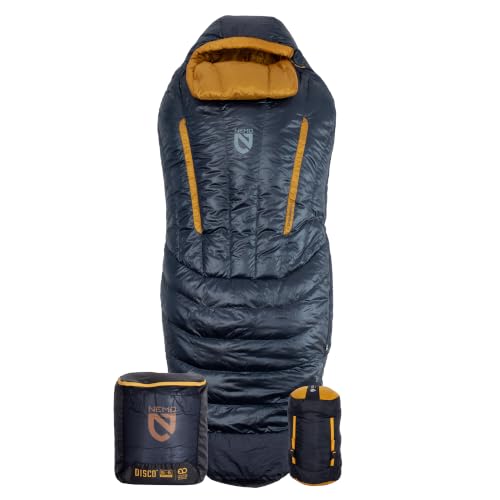
Get the NEMO Disco 15. It's cut wide at the elbows and knees, so you can sleep on your side without twisting the whole bag with you, it stays comfortable into the high 20s, and two zippered vents let the heat out when the night is milder than forecast. It weighs a bit under three pounds and costs about $300.
The number in a sleeping bag's name is the thing to be careful with. Late one September at Graveyard Fields, the forecast said low 40s, and the tent was white with frost at dawn. Most bags are named after the coldest night you can get through, not the coldest you'll sleep well in. That's why every bag below lists its comfort rating next to the name.
For less money, the Cosmic 20 is a real down bag for about $190, good down to freezing. If every ounce counts, the Parsec weighs almost a pound less than the Disco. For damp trips, the synthetic Trestles keeps you warm when it's wet, and the Trailhead is the summer bag for about $65.
Almost a pound lighter than the Disco, and it packs to the size of a small loaf. The 20 on this one is the lower limit, so it's a bag for nights around freezing.
Spoon shape for side sleepersTwo zippered vents on topWater-resistant hood and footboxRegular Wide version too
+−Read the full write-upHide the full write-up
Why I picked it
Most mummy bags are cut for someone lying flat on their back and not moving. If you sleep on your side, or turn over a few times a night, a tight mummy turns with you, and you wake up with the hood over your face. The Disco is shaped like a spoon, wider at the elbows and knees, so your knees can bend and the bag stays put.
The ISO rating, a standard lab measure, puts its comfort at 27°F and its lower limit at 16°F. On the top there are two zippered vents NEMO calls Thermo Gills, which you open on a mild night instead of unzipping the whole side and letting in a cold draft. A big padded collar seals the shoulders, and the hood and footbox are in a fabric that shrugs off tent condensation. The down is 650-fill and treated to resist water.
Who it is for
Side sleepers, restless sleepers, and anyone who has felt trapped in a mummy bag. It's the bag I'd buy for weekend trips from spring to late fall in the mountains.
What reviewers found
One reviewer spent a week of desert nights in Utah between 15 and 20°F in it, in a base layer, and stayed warm. Reviewers agree on the cost of the room: there's more space inside to heat up, and the bag weighs between 2 lb 11 oz and 2 lb 14 oz depending on whose scale you trust, more than most bags on these lists. The 650-fill down also packs bigger than the premium bags.
Flaws but not dealbreakers
Heavier and bulkier than a close-fitting mummy of the same warmth.
All that room takes a little longer to warm up when you first get in.
Not the bag for long trails where every ounce counts.
2
Down on a budget
Kelty Cosmic 20
A real down bag for under $200, about two and a half pounds. Count on it down to freezing, not to the 20 in its name.
Fits to 6 ft (regular)Two-way zipperFull-length draft tubePacks to about 11 liters
+−Read the full write-upHide the full write-up
Why I picked it
Down for under $200 is rare, and this is the one that keeps showing up on budget lists. It weighs 2 lb 7 oz in the regular, which fits sleepers up to 6 feet, and compresses to about 11 liters. The zipper runs both ways, so you can open the foot on a warm night.
The catch: the 20 in the name is close to its ISO lower limit, 21°F. Its comfort rating is 31°F. That makes it a bag for nights around freezing, which covers most summer backpacking and not much more.
Who it is for
Your first down bag, for summer and the edges of spring and fall.
Skip it if
You sleep on your side, or your trips go into the 20s.
What reviewers found
One reviewer, in the Columbia River Gorge with lows in the 20s, was cold in wool layers and a down jacket and ended up adding a blanket. The same review found the middle of the bag narrow, a squeeze for side sleepers even in the long size. The zippers ran smoothly, and the heavy shell feels tougher than the ultralight bags. The down isn't treated against water, so keep it dry.
Flaws but not dealbreakers
Comfort stops around freezing, well above the 20 in its name.
Narrow through the middle.
The 550-fill down needs more of it for the same warmth, so it packs bigger than pricier bags.
3
Counting ounces
Therm-a-Rest Parsec 20
Almost a pound lighter than the Disco, and it packs to the size of a small loaf. The 20 on this one is the lower limit, so it's a bag for nights around freezing.
Almost a pound lighter than the Disco, and it packs to the size of a small loaf. The 20 on this one is the lower limit, so it's a bag for nights around freezing.
Packs to 7 by 10.5 inchesYKK anti-snag zipperFoot warmer pocketWater-resistant down
+−Read the full write-upHide the full write-up
Why I picked it
This is the light one you can still buy on Amazon. The regular weighs 1 lb 13 oz, 14 ounces less than the Disco, and packs down to 7 by 10.5 inches. The 2026 version uses 900-fill down treated to resist water, so less of it does the same job, and Therm-a-Rest puts more of it where you lose the most heat.
The details help on a cold night. The zipper is a YKK anti-snag model you can work with one hand, there's a pocket in the footbox for a hand warmer, and the hood cinches down around your face.
Who it is for
Backpackers who carry everything on their back for days and want the bag to be the lightest thing in the pack. Pair it with a warm pad.
Skip it if
Your nights go much below freezing. The 20 here is the lower limit; Therm-a-Rest rated the previous version's comfort at 32°F.
What reviewers found
The previous Parsec, built the same way with 800-fill down, drew praise for its warmth for the weight and a cut roomier than Therm-a-Rest's racing bag, the Hyperion, which suits side sleepers. One reviewer couldn't get its zippers to snag. The 2026 bag is new enough that there's little written on it yet.
Flaws but not dealbreakers
About $470, the most expensive bag here.
A bag for around freezing, not for the 20s.
Regular fits to 6 feet; taller hikers need the long, about $30 more.
4
Wet trips
Marmot Trestles 15
Synthetic fill keeps you warm when everything is damp, and it's comfortable into the high 20s for about $130. The price is weight and bulk.
Fits to 6 ft (regular)Two-way zipperWater-repellent shellPacks to 9 by 13 inches
+−Read the full write-upHide the full write-up
Why I picked it
Down loses most of its warmth when it gets wet. On a trip where it rains three days running, or in a single-wall tent that drips condensation on you all night, synthetic fill keeps working. The Trestles is the synthetic bag to get on Amazon: comfortable to about 27°F by its EN/ISO rating, in a polyester shell that sheds water.
The shell is a thick 70-denier polyester, the zipper runs both ways, and the footbox is shaped for your feet rather than cut flat.
Who it is for
Wet climates, long rainy trips, and anyone who doesn't want to baby a down bag.
Skip it if
You carry the bag far. At 3 lb 6 oz and 9 by 13 inches packed, it's the heaviest and biggest here.
Flaws but not dealbreakers
Heavy and bulky, about a pound and a half more than the Parsec.
Regular fits only to 6 feet.
5
Summer, under $70
TETON Sports Trailhead 20
The cheap way to get a mummy bag into your pack for summer trips. Despite the name, it's comfortable in the 40s, not at 20.
Packs to 14.5 by 6.5 by 6.5 inchesZipper with anti-snag guardLifetime warrantyHang loops for airing it out
+−Read the full write-upHide the full write-up
Why I picked it
It costs about $65 and works fine for summer, as long as you treat it as a summer bag. The synthetic fill is thin, the shell is a tough 75-denier fabric, and it packs to 14.5 by 6.5 by 6.5 inches. TETON backs it for life.
The name says 20 degrees. Don't plan on it: reviewers put its real comfort in the 40s.
Who it is for
Summer trips, a first backpacking weekend before you know if you'll do it again, or a spare bag for a friend.
Skip it if
You're broad in the shoulders. It's 32 inches across at the shoulders and narrows to 22 at the feet.
What reviewers found
One reviewer took it into freezing nights in Colorado and came back saying plainly that it isn't a bag for winter or the shoulder seasons. The same review found it light for a synthetic bag, at 2 lb 12.3 oz on their scale, with a zipper that doesn't snag thanks to a webbing guard. It's a tight fit that takes some wiggling to get into, and once you're in, it warms up fast.
Flaws but not dealbreakers
Comfortable in the 40s, not at 20.
Tight in the shoulders.
Bigger in the pack than a down bag of the same warmth.
Who this is for
This guide is for backpackers carrying their bed on their back, from summer to the cold edges of spring and fall. If you're sleeping next to the car, weight doesn't matter, and a cheaper, roomier rectangular bag does the job. For a bed off the ground at the campground, see the best camping cots.
Whatever bag you buy, sleep on a pad. A bag's insulation is crushed flat under your body, so the cold from the ground goes straight through it. A sleeping pad with the right R-value does that job, and a cold bag on a thin pad will feel colder than its rating. To make room for it all, here's how to pack a backpack with the sleeping bag at the bottom.
How to choose
Look at the comfort rating, not the name
Most bags are named after their lower limit, the temperature at which a sleeper curled up in a ball gets through the night. The comfort rating is where you sleep well lying relaxed. Pick a bag whose comfort rating is at or below the coldest night you expect. If you sleep cold, leave yourself a margin below that, and sleep in a dry base layer.
Down for weight, synthetic for wet
Down is lighter and packs smaller for the same warmth, and lasts longer if you look after it. Synthetic fill is cheaper and keeps you warm when wet. Treated down, like the Disco's and the Parsec's, handles damp better than plain down, but it isn't a synthetic bag.
Pick the shape for how you sleep
A close mummy is warmest for its weight because there's less air for you to heat. If you sleep on your side, a tight mummy will annoy you all night. The Disco is cut wider, and the Parsec is roomier than most light bags.
Weigh it against the rest of your pack
Under two pounds is light, two to three is normal for a three-season bag, and over three you'll feel it on the climbs. A four-pound bag isn't wrong for a weekend, but it's a pound or two you could carry as food or water.
The competition
Western Mountaineering UltraLite
A first choice on several lists, with superb warmth for its weight. It costs over $600 and isn't sold on Amazon.
REI Co-op Magma 15
850-fill down, nine sizes, and a lower price than the premium bags. Sold only at REI.
No zipper at all, a quilt-like top you tuck around yourself. Reviewers are split on it, and its listed weights don't agree from one source to the next.
Mountain Hardwear Bishop Pass 15
A good anti-snag zipper at a mid-range price, but only the 30°F long version is on Amazon.
How we picked
A 15 to 20°F rating in the nameUnder 3 lb 8 oz in regularSold on Amazon in regularA published comfort rating or a reviewer's real-night verdictUnder $500
The first list had 26 bags, from the ones that lead OutdoorGearLab, CleverHiker and BetterTrail to the bags actually sold on Amazon. Many of the top picks elsewhere, Western Mountaineering, Feathered Friends, REI's own bags, aren't on Amazon, so they're in the competition rather than the ranking.
For each bag I set the comfort rating next to the number in the name, from ISO and EN figures, and when a bag had none, from what reviewers found on real cold nights. Weights are for the regular size, as published by the maker or measured by reviewers.
Common questions
What kind of sleeping bag is best for backpacking?+−
A down mummy bag rated around 20°F, weighing two to three pounds, covers most three-season trips. Choose synthetic if your trips are wet, and a roomier cut like the NEMO Disco if you sleep on your side.
Is a 4 lb sleeping bag too heavy for backpacking?+−
For a weekend, it's carryable, but it's heavy. Most three-season backpacking bags weigh two to three pounds, and the lightest here is under two. A four-pound bag is usually a car camping bag or a winter bag.
What is the best affordable backpacking sleeping bag?+−
The Kelty Cosmic 20, about $190, for a down bag good to freezing. Under $70, the TETON Trailhead 20 works for summer, as long as you know it's comfortable in the 40s, not at 20.
What temperature rating do I need?+−
One whose comfort rating is at or below the coldest night you expect. For the mountains from spring to fall, that usually means a bag named 15 to 20°F, with a comfort rating in the high 20s or low 30s.
Down or synthetic for backpacking?+−
Down if weight and pack space matter most, synthetic if you're often wet or on a tight budget. Treated down closes some of the gap but still needs to be kept dry.
The verdict
Buy the NEMO Disco 15
The Disco 15 is the backpacking bag for most people at about $300: warm into the high 20s, and shaped so side sleepers sleep instead of fighting the bag.
If weight comes first, pay more for the Parsec, almost a pound lighter. If money comes first, the Cosmic 20 is warm down to freezing for about $190.