Which pad to buy for the car, the trail or a sore hip, from about $50 to $260, and what owners say about leaks and noise.
By Alex HartDay trails mostly, a few nights out a year, mountains when the time allows.
Updated Oct 2026·23 compared
We earn a commission if you buy through our Amazon links, at no extra cost to you. How this worksAmazon prices as of Nov 5, 7:16 AM ET, subject to change. Details
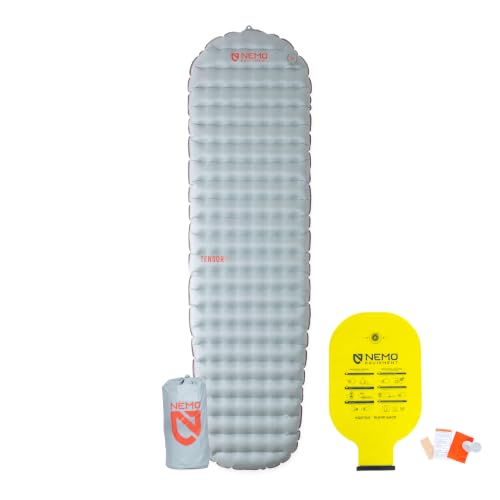
Get the NEMO Tensor All-Season. It's 3.5 inches thick and warm enough for a night near freezing. It weighs under a pound and rolls up to about 10 by 4 inches. That's the pad I'd buy if I could only own one, at about $220, and it's just as good at a drive-in campsite as it is on a backpacking trip.
Warmth is what most people get wrong: on a cold night, a thin summer pad leaves you shivering however good your sleeping bag is. If you only camp next to your car, the MondoKing is a camp mattress over 4 inches thick and warmer still, for about $260, and the BaseCamp does most of that job for about $120. If you sleep on your side, get the Ether Light. For the lightest pack there's the XLite, and for summer on a tight budget, the Static V at about $50.
72 by 20 inches, RegularPump sack includedMummy, wide and long sizesLifetime warranty on defects
+−Read the full write-upHide the full write-up
Why I picked it
This is the pad that doesn't make you choose between car camping and backpacking. At 15.5 ounces in the Regular, it's light enough to carry for a week, and at 3.5 inches it's thick enough that your hip doesn't find the ground when you roll onto your side. The warmth comes from two layers of metallized film that NEMO built to stay quiet, and reviewers find it a little quieter than the XLite below.
The R-value of 5.4 is what sets it apart from the cheaper air pads. It covers you from summer to nights around freezing, and on a late-fall weekend at the campground you won't be wishing you'd brought the foam pad from the garage. A pump sack comes in the box, so you don't have to blow it up.
Who it is for
Anyone who camps both ways, from the car one weekend and on foot the next, and wants one pad that does both. Get the Regular Wide (about $240) if you sprawl, or the Mummy (about $200) if you count ounces.
What owners report
Only seven owners have reviewed it so far. Six gave it top marks, one gave it four, and none complained. They mention the room, the easy pump sack and, for one of them, more warmth and thickness than the insulated Klymit he'd used before.
The longer-term notes come from people who slept on it for weeks. One hiker spent more than a month on it on the Oregon Coast Trail and the Bigfoot Trail and finished without a leak, though the stuff sack tore in the first week and the gray top turned brown. Another reviewer slept on it for about a month of nights, down to around 23°F, with no leaks or valve trouble. The valve sits on top, and one reviewer found it can pop open by accident, so check it's closed before you lie down.
Flaws but not dealbreakers
The valve is on the top face and can open if you knock it.
The stuff sack is snug, and one long-distance hiker tore hers in the first week.
At about $220, it costs four times what the Static V does.
2
Sleeping by the car
Therm-a-Rest MondoKing 3D
The closest thing to your bed at home, 4.25 inches of foam and air, 25 inches wide, and warm enough for a night below freezing.
77 by 25 inches, LargeSeparate valves to fill and emptyRolls to 26 by 10.3 inchesMade in the USA
+−Read the full write-upHide the full write-up
Why I picked it
If the car is never more than a few steps away, weight stops mattering, and here's what you get for it: 4.25 inches of foam and air with straight sides, so the whole 25-inch width is usable and you don't roll off the edge. It's the nearest thing to a real mattress you can fit in a tent, and with an R-value of 7, it's warm enough to sleep on frozen ground.
Therm-a-Rest gives it two valves, one to fill and one to empty, and says that empties it five times faster than a single valve. The stuff sack doubles as a pump.
Who it is for
Car campers, family weekends, a van, and anyone who's tried a backpacking pad and woken up sore. Get the XX-Large (80 by 30 inches, about $290) if you're tall or share the tent with a dog.
Skip it if
You'll carry it more than a few hundred yards. It weighs 4 lb 6 oz and rolls to 26 by 10 inches, a bundle that takes up a real piece of the trunk.
What owners report
Most owners are happy with it, and when they aren't, it's usually about air. Twenty-seven of its 189 reviews give it three stars or fewer, and 13 of those say it went soft or a seam let go. One owner found it flat an hour and a half after filling it on his second trip and spent the next 13 nights topping it up every two hours. Another had a guest wake up with his hips on the hardwood floor. A few seams opened after a year or two.
The other complaint is the fiddling. Nine of those unhappy owners found it slow to fill or to empty, or had the pump sack tear. The foam only fills it about halfway on its own, and Therm-a-Rest's answer is to store it unrolled, so the foam stays ready to spring back. Six more owners who liked it still called it bulky.
Flaws but not dealbreakers
About 1 in 2 of the unhappy owners had it lose air, a few of them within the first trips.
Plan on a few breaths or the pump sack to top it up, and store it flat at home.
Big and heavy rolled up, it's a car-only pad.
3
Car camping under $120
Therm-a-Rest BaseCamp
Open the valve and the foam fills most of it for you. It sleeps warm in any season, for about half the MondoKing's price.
72 by 20 inches, RegularSelf-inflating foamLarge and XL sizesMade in the USA
+−Read the full write-upHide the full write-up
Why I picked it
This is the cheap way to sleep warm by the car. It's two inches of foam inside an airtight shell, so when you open the valve, the foam does most of the filling, and the R-value of 6 means it works from July to a frosty November weekend. At about $120, it's less than half the price of the MondoKing.
Who it is for
Car campers on a budget, and anyone buying pads for the whole family. Get the Large (77 by 25 inches, about $135) if you're over six feet or sleep on your side.
Skip it if
You want cushion more than warmth. Two inches is firm next to the 3 to 4.25 inches of the thicker air pads here.
What owners report
Nine in ten owners are happy with it. Among the unhappy ones, five say the same thing: too thin, too narrow, or both, with one owner finding the Regular narrow even for a 10-year-old. Four had it lose air or bubble, and two found the fabric slick enough that the sleeping bag slides off. One five-star owner put it simply: it's not compact, and it's not for backpacking.
Flaws but not dealbreakers
At 20 inches, the Regular is narrow for an adult who moves at night.
The fabric is slippery under a sleeping bag.
No pump sack in the box.
4
Backpacking
Therm-a-Rest NeoAir XLite NXT
Thirteen ounces and about the size of a liter bottle rolled up, with enough warmth for three seasons. Carry the repair kit.
72 by 20 inches, RegularPump sack and patch kit includedRolls to 9 by 4.1 inches30-denier nylon
+−Read the full write-upHide the full write-up
Why I picked it
When the pad rides on your back for miles, weight is what you feel, and this one weighs 13 ounces and rolls up about the size of a liter bottle. It's the lightest pad here, 3 inches thick, with an R-value of 4.5 that covers three seasons.
Who it is for
Backpackers who want the lightest load, and anyone who already owns a heavier pad for the car.
Skip it if
You sleep on your side and move a lot. The Regular is 20 inches wide and tapers at the ends.
What owners report
This is the pad where owners split the most. Almost a third of its 161 reviews give it three stars or fewer, and nearly half of those unhappy owners had a leak. One hiker on the Colorado Trail had it flat on the first night. Another found a seam torn after three nights. Seven owners name the same weak spot: the hard plastic valve rubs through the thin fabric around it, and one of them went through two pads that way, more than 60 miles from a road both times.
Noise comes up too. Therm-a-Rest made it quieter than the old XLite, but six owners still say it crinkles. One woke up every time she turned over, and another had tent neighbors complain. Five found it narrow and slippery enough to slide off.
Flaws but not dealbreakers
Leaks are the main complaint, often around the valve. Pack the patch kit that comes with it.
Still crinkles when you turn over.
Narrow and tapered in the Regular. The Regular Wide is 25 inches.
5
Side sleepers
Sea to Summit Ether Light XR Insulated
Almost 4 inches of air under your hip and a full 25-inch rectangle, so your knees and elbows stay on the pad all night.
72 by 25 inches, rectangularPump sack built into the stuff sackTapered and large sizesWarranty for the life of the pad
+−Read the full write-upHide the full write-up
Why I picked it
If you sleep on your side, thickness and width matter more than anything else, and this pad has both: about 3.9 inches of air under your hip, and a full 25-inch rectangle so your knees and elbows stay on it. The R-value of 4.1 covers three seasons, and the stuff sack is also the pump.
At 21.3 ounces, it's heavier than the Tensor, but it's still a pad you can backpack with.
Who it is for
Side sleepers who wake up with a sore hip or a numb shoulder on thinner pads, whether by the car or on a trail.
Skip it if
You share a tent with a light sleeper. Noise is what owners complain about most.
What owners report
Owners like it a lot, and complaints are rare: eight reviews out of 92, five of them about noise. One owner sent it back because friends in a different tent could hear her turning over. Another said everyone in his group complained. Two others had a slow leak they couldn't find, one of them on a bike tour, two weeks in.
Flaws but not dealbreakers
Louder than the Tensor when you move, and that's what the unhappy owners mention most.
Heavier than the other backpacking pads here, at 21.3 ounces.
About $240.
6
Summer on a budget
Klymit Static V
A real air pad, 2.5 inches thick and 23 inches wide, for about $50. Keep it for summer, when the ground doesn't pull much heat.
72 by 23 inchesPacks to 8 by 3 inches75-denier polyester10 to 15 breaths to fill
+−Read the full write-upHide the full write-up
Why I picked it
For about $50, you get a real air pad, 2.5 inches thick and 23 inches wide, a few inches wider than most backpacking pads. Klymit shapes the chambers in V's to keep the air from moving around under you, and it fills in 10 to 15 breaths.
The catch is warmth. Klymit gives it an R-value of 1.3, which is a summer number. OutdoorGearLab's reviewers felt the cold seeping up once nights dropped into the low 40s.
Who it is for
Summer campers, kids' first camping trips, and a spare pad for a guest.
Skip it if
You camp in spring or fall. Once nights drop into the 40s, you'll want the Tensor or the BaseCamp, or a foam pad underneath this one.
Flaws but not dealbreakers
Cold from fall to spring.
The side rails take up some of that 23-inch width.
Slow to empty all the way: there's always some air left to push out.
7
A pad that can't go flat
NEMO Switchback
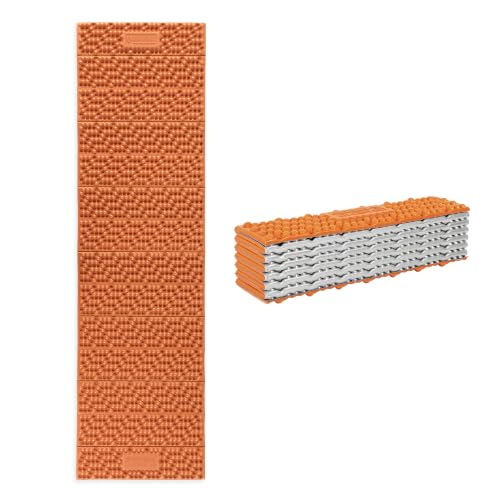
Unfold it and lie down. There's no valve and nothing to puncture, and it doubles as extra warmth under an air pad when it gets cold.
72 by 20 inchesFolds to 20 by 5 by 5.5 inchesClosed-cell foamLifetime warranty on defects
+−Read the full write-upHide the full write-up
Why I picked it
You unfold the Switchback and lie down: there's no valve, no breathing, nothing a thorn or a dog's claw can ruin. At 14.5 ounces and about $60, it's the toughest pad here, and it does a second job when it gets cold, under an air pad, adding warmth and protecting it from sharp ground.
Who it is for
Back and stomach sleepers who can live with a firm bed, anyone hard on gear, and anyone who wants a backup layer for winter.
Skip it if
You sleep on your side. At 0.9 inches, it's firm, and your hip and shoulder will feel it.
What owners report
Ten owners have reviewed it, none below three stars, and four of them say it's bulky folded, at 20 by 5 by 5.5 inches. One sent it back, finding it noisy. Reviewers who slept on it for a month found the foam bumps flattening a little over time.
Flaws but not dealbreakers
Hard for side sleepers.
Too bulky to go inside most packs.
With an R-value of 2, it's a summer pad on its own.
Who this is for
This guide covers both kinds of camping: from the car, where you can take a thick, heavy pad, and with a pack on your back, where you can't. The Tensor sits between the two, and the others lean one way or the other. If you're heading out alone with a pack, my guide to the best 1-person backpacking tents covers the shelter, from about $100.
If you're weighing a cot instead, it sleeps colder than a good pad unless you put one on top. My camping cots guide covers that choice, the 2-person cots guide does the same for couples, and the camping checklist has the rest of the gear for a night out.
How to choose
Decide where the pad travels
If it rides in the car, buy comfort: a self-inflating pad like the MondoKing or the BaseCamp, 2 to 4.25 inches of foam, 2 lb 8 oz to 4 lb 6 oz. If it rides in a pack, buy an air pad under about 1 lb 6 oz, like the Tensor, the XLite or the Ether Light. A backpacking pad is fine at the campground, but the reverse isn't true.
Match the R-value to your coldest night
The R-value tells you how well a pad stops the ground from pulling heat out of you, and higher is warmer. Under 3 is for summer. From 3 to 5 covers spring through fall. Above 5 is what you want for a night near or below freezing. Two pads stacked add up, so a foam pad under an air pad is the cheap way to go warmer.
Side sleepers need thickness and width
On your back, 2 inches is plenty. On your side, your hip carries your weight on a small spot, and you want 3.5 inches or more of air. Width counts too: a 20-inch pad leaves an arm hanging off, and 25 inches keeps it on. Most pads here come in a wider size for about $20 more.
Plan for a leak
Every air pad can puncture. Clear the ground under the tent, keep a patch kit in your bag, and at the campground, a foam pad under the air pad protects it and adds warmth.
The classic folding foam pad, R-value 2 and 14 ounces, about $50 to $60. It does the same job as the Switchback: buy whichever is cheaper when you order.
R-value 7.3 at 15.5 ounces, the same weight as the Tensor and far warmer, at about $230. It's half an inch thinner, and if you camp into winter, it's the better buy.
An R-value of 8.1 and 4 inches thick, at about $260. It's warmer than the MondoKing on paper, for the same price and 3 ounces more, and the MondoKing is a little thicker. Either makes a fine car-camping bed.
R-value 4 and 3.25 inches for about $130, a fair price for a three-season backpacking pad. Big Agnes's own page doesn't give its weight, so it's hard to set against the Tensor and the XLite.
A self-inflating pad with an R-value of 5.3, about 2.75 inches thick, for about $99. The BaseCamp sleeps a little warmer for about $20 more.
Therm-a-Rest NeoLoft
A backpacking pad 4.6 inches thick, with an R-value of 4.7, at about $250 and 1 lb 9 oz. It's for side sleepers who want the very thickest pad and don't mind the weight. The Ether Light does most of that for less.
How we picked
R-value published by the makerAt least 72 inches longLifetime or limited lifetime warrantyUnder 5 lb for the car, under 1 lb 6 oz for the packUnder $270 in the base size
Twenty-three pads were in the running, from $50 air pads to $290 camp mattresses, each set against what its maker publishes: R-value, thickness, weight, size rolled up and warranty. The seven here give the most warmth and comfort for their weight and price.
What owners say about the MondoKing 3D, the BaseCamp, the XLite NXT and the Ether Light XR comes from the 611 reviews on Therm-a-Rest's and Sea to Summit's own sites, unhappy ones first. For the others, it comes from retailer reviews and long-term write-ups.
Common questions
Are sleeping pads worth it for camping?+−
Yes, and more for warmth than for comfort. The ground pulls heat out of you all night, and even a good sleeping bag can't stop it, because the insulation under you is crushed flat. A pad with the right R-value is what keeps you warm from below.
What is the most comfortable sleeping pad for camping?+−
By the car, a thick self-inflating mattress like the MondoKing 3D, at 4.25 inches with straight sides. For backpacking, a thick air pad: the Ether Light XR Insulated at about 3.9 inches, or the Tensor All-Season at 3.5.
Is an air mattress better for camping than a sleeping pad?+−
Not when it's cold. A regular air mattress is a big bag of air that moves and carries your heat away, so on a cool night it sleeps colder than a pad with a real R-value. Put an insulated pad on top of it, or buy a camp mattress like the MondoKing instead.
What R-value do I need for a sleeping pad?+−
Under 3 for summer, 3 to 5 for spring through fall, and above 5 for nights near or below freezing. If you're between two, go warmer: you can always open your bag, but you can't add a pad you didn't bring.
What is the best sleeping pad for side sleepers?+−
A thick, wide one. Look for at least 3.5 inches of air and a 25-inch width. The Sea to Summit Ether Light XR Insulated in its rectangular shape has both. A firm foam pad is the worst choice for side sleepers.
The verdict
Get the NEMO Tensor All-Season
The Tensor is the pad for most people, at about $220. It's warm on nights near freezing, thick enough to sleep on your side, and light enough to carry.
If you only camp next to your car, get the MondoKing, or the BaseCamp to spend half as much. For the lightest pack, get the XLite and keep its patch kit handy.