Trail Gear Picks
Buying guide

The Best 1-Person Backpacking Tents

Six solo tents from about $100 to $500, the best one for most backpackers, cheaper picks with or without trekking poles, and what owners say about condensation and setup.

By Alex HartDay trails mostly, a few nights out a year, mountains when the time allows.
Updated Oct 2026·31 compared

We earn a commission if you buy through our Amazon links, at no extra cost to you. How this worksAmazon prices as of Nov 5, 7:16 AM ET, subject to change. Details

Pitch the Big Agnes Copper Spur UL1 on a granite slab, a sandbar or a wooden platform and it stands on its own poles. It weighs 2 pounds, and its side door props up on trekking poles into an awning, so you can cook or pull your boots off in the doorway while it rains. At about $500, it's the solo tent I'd point most backpackers to, the one with the least to complain about.

Not ready to spend $500? If you hike with trekking poles, the Lunar Solo weighs 26 ounces for about $270, and the Lanshan 1 gets you most of the way there for about $140. Without poles, the Late Start is the easiest to pitch at about $150, and the Cloud-Up 1 costs about $100. If you sleep on a thick, wide pad or you're over 6 feet, get the Hubba Hubba LT 1.

Our picks

Big Agnes Copper Spur UL1
Our pick
Big Agnes Copper Spur UL1

Two pounds, stands up on its own anywhere, and the side door props up into an awning so you can sit in the doorway out of the rain.

MSR Hubba Hubba LT 1
Roomiest
MSR Hubba Hubba LT 1

A true rectangle 32 inches wide with near-vertical walls, so a wide pad over 4 inches thick lies flat and the walls stay off your face.

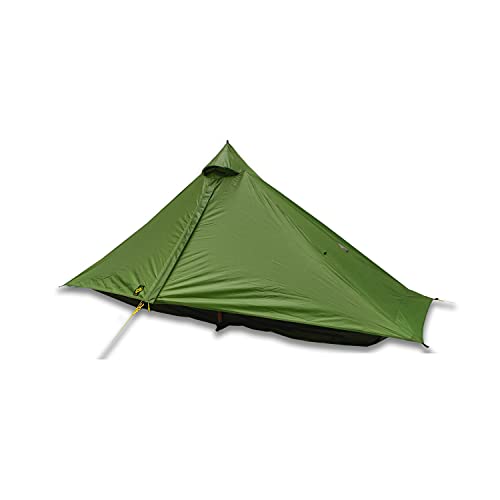
Six Moon Designs Lunar Solo
Lightest
Six Moon Designs Lunar Solo

Twenty-six ounces, held up by one of your trekking poles, with 49 inches of headroom and room for your pack inside.

3F UL Gear Lanshan 1
Best value ultralight
3F UL Gear Lanshan 1

A double-wall trekking pole tent for about $140 and 2.1 pounds, long enough for a hiker around 6 foot 2.

Kelty Late Start 1P
Easiest to pitch
Kelty Late Start 1P

Poles drop into sewn corner pockets and the fly is color-coded, so it goes up in a few minutes, and it stands on its own poles.

Naturehike Cloud-Up 1
Under $100
Naturehike Cloud-Up 1

A real double-wall, freestanding backpacking tent with aluminum poles and a footprint in the box, for about $100.

At a glance

Product names go to Amazon. Rank numbers jump to the full write-up.

TentBest forWeightPitchFloor lengthAbout
1Big Agnes Copper Spur UL1Most solo backpackers2 lbFreestanding88 in$500
2MSR Hubba Hubba LT 1Thick pads and tall hikers2 lb 6 ozFreestanding88 in$470
3Six Moon Designs Lunar SoloTrekking pole hikers1 lb 10 ozOne trekking pole90 in$270
43F UL Gear Lanshan 1A light tent on a budget2 lb 2 ozOne trekking poleAbout 90 in$140
5Kelty Late Start 1PFirst backpacking trips3 lb 9 ozFreestanding84 in$150
6Naturehike Cloud-Up 1The tightest budget3 lb 11 ozFreestanding83 in$100

The best 1-person backpacking tents, ranked

1Most solo backpackers
Big Agnes Copper Spur UL1

Big Agnes Copper Spur UL1

Two pounds, stands up on its own anywhere, and the side door props up into an awning so you can sit in the doorway out of the rain.

2 lb trail weight, 2 lb 6 oz packed20 sq ft floor, 38 in high9 sq ft vestibulePacks to 18 x 4 in
+Read the full write-up

Why I picked it

Big Agnes has refined this tent since 2008, and it shows in the small things. At 2 pounds, it's light enough that you stop thinking about it in the pack, and it's freestanding: the poles hold it up, so you can pitch it where stakes won't bite, then pick it up and move it if you find a root under your hip.

Inside, near-vertical walls and a short spreader pole at the top push the fabric out, so more of the 20 square feet is usable, and there's an oversized 3D pocket for your headlamp and phone. The door is on the side, so you crawl in and out without climbing over your feet. Prop the vestibule on trekking poles and it turns into a 9-square-foot porch you can cook under when it rains.

Big Agnes moved it to a new fly and floor fabric, HyperBead, in 2025: 1,500 mm waterproof, made without added PFAS, and it sags less when wet. You can also pitch the fly alone with the footprint (sold separately) and drop to 1 lb 10 oz.

Who it is for

Anyone who wants one solo tent for everything, from a first overnight to a week on a long trail, and doesn't want to learn a trekking pole pitch.

What reviewers found

Reviewers who spent nights in it found the ventilation good, with two vents in the fly and a double zipper on the door, and saw no real condensation on cold nights. The parts are color-coded, and people who had never seen the tent figured out the pitch. The complaints are small: the stakes it comes with are weak, the TipLok buckles get stiff when they're full of mud, and a UK review found it less storm-proof than some rivals and not as light as hoped for the price.

Flaws but not dealbreakers

  • About $500, and the footprint is extra, about $80 more.
  • The stakes are flimsy. Budget for a few better ones.
  • At 2 pounds, it's light, not ultralight. The Lunar Solo, a trekking pole tent, saves 6 ounces.
2
MSR Hubba Hubba LT 1
Thick pads and tall hikers

MSR Hubba Hubba LT 1

A true rectangle 32 inches wide with near-vertical walls, so a wide pad over 4 inches thick lies flat and the walls stay off your face.

32 x 88 in rectangular floor39 in highMostly mesh bodyPacks to 18 x 5 in
+Read the full write-up

Why I picked it

Most solo tents taper toward the feet, and a wide sleeping pad ends up pressed against the walls. The Hubba Hubba LT 1 doesn't taper. It's a true 32 by 88 inch rectangle with walls that go up nearly straight, and MSR built it for thick rectangular pads, even ones over 4 inches. At 39 inches high, you can sit up to change.

The body is almost all mesh, so it breathes on a humid night, and there's a ceiling pocket, end pockets with a hole for a charging cable, and a cord across the top to hang a wet shirt. It's freestanding, uses a single hubbed pole, and weighs 2 lb 6 oz at the minimum.

Who it is for

Side sleepers on a fat pad, tall hikers, and anyone who's felt shut in by a tapered solo tent.

Skip it if

You want two doors. This one has a single door and vestibule.

What owners report

This version is new, with 18 owner reviews on MSR's site so far, and 13 of them give it five stars. One took it on Colorado Trail segments and loved the headroom, another sat out a midnight wind with 30 mph gusts and found it steady, and a scout leader stayed dry in light rain at 40°F.

Two owners snapped a pole, one in New Zealand on his last night, one in the wind on his second. One found that the floor rises a few inches up the sides and sags like a hammock unless a wide, stiff pad holds it out, and another wished the stakes had pull loops.

Flaws but not dealbreakers

  • Two owners out of 18 had a pole break early.
  • One door only.
  • About $470, close to the Copper Spur for 6 more ounces.
3
Six Moon Designs Lunar Solo
Trekking pole hikers

Six Moon Designs Lunar Solo

Twenty-six ounces, held up by one of your trekking poles, with 49 inches of headroom and room for your pack inside.

26 oz without stakes26 sq ft floor, 49 in highNeeds a 49 in poleSeams to seal before rain
+Read the full write-up

Why I picked it

If you already hike with trekking poles, one of them can hold up your tent, and that's where the weight goes. The Lunar Solo weighs 26 ounces, and for that you get a 90 by 48 inch floor, 49 inches of headroom at the peak and a vestibule big enough for your pack and boots. Six Moon has made it for years, and owners have carried it on thru-hikes of the Appalachian Trail and on the CDT.

It's a single-wall tent: the outer fabric is the wall, with mesh around the bottom for air. Single wall saves weight, and it also means wet walls on cold nights.

Who it is for

Hikers who carry trekking poles and want the lightest tent here, including thru-hikers and anyone who brings a dog.

Skip it if

You don't hike with poles, or you want a tent that goes up perfectly the first time. Six Moon sells a 49-inch pole if you don't have one.

What owners report

Six Moon's site has 300 reviews of it, and only 9 give it three stars or fewer. The happiest owners rode out storms in it, one with hail and gusts past 60 mph, another through a night of 40 to 50 mph gusts in Montana's Beartooths. Thirteen mention sharing it with a dog, one an 85-pound Lab.

Wet walls come up in 68 of the 300 reviews: condensation in the morning, and a quilt that gets damp where the foot touches the fabric. Owners also say the pitch takes practice. One hiker was still moving stakes after eight nights in the Sierra, and many advise a few tries in the backyard first. The floor is slick, so a pad slides on uneven ground, and stakes aren't included, which annoyed several buyers. The seams have to be sealed with silicone before the first rain, about an hour of work plus a night to cure, or Six Moon does it for a fee.

Flaws but not dealbreakers

  • Condensation on cold, still nights, as with any single-wall tent.
  • No stakes in the box, and the seams need sealing.
  • The pitch takes a few tries to get tight.
4
3F UL Gear Lanshan 1
A light tent on a budget

3F UL Gear Lanshan 1

A double-wall trekking pole tent for about $140 and 2.1 pounds, long enough for a hiker around 6 foot 2.

2.1 lb as listedDouble wall, mesh innerNeeds a 120 to 125 cm poleSeams sealed at the factory
+Read the full write-up

Why I picked it

Curious about trekking pole tents? The Lanshan 1 lets you try one without spending much. For about $140 you get a double-wall tent, with a mesh inner and a separate fly, at 2.1 pounds. The double wall matters: condensation stays on the fly instead of dripping on your bag, which is the main complaint about single-wall tents.

It's long, too. The inner is about 90 inches, enough for a hiker around 6 foot 2 with a pack at the head end, and the vestibule fits a pack and boots. You pitch it with one trekking pole set to 120 to 125 centimeters.

Who it is for

Hikers on a budget who want to go light, and anyone curious about trekking pole tents before spending $300 or more.

What owners and reviewers say

Owners agree on two things: it handles wind and rain well for its weight, and the pitch takes a few tries to get taut and even. It's harder on rocky ground where stakes won't bite. Pitch the fly right down to the ground against the wind and condensation comes back, so leave a gap when you can. The floor fabric is thin, so a footprint is worth adding. Despite the "3/4 season" label, owners treat it as a three-season tent.

Flaws but not dealbreakers

  • The pitch needs practice and stakes that hold.
  • Thin floor. Add a footprint.
  • No trekking pole in the box.
5
Kelty Late Start 1P
First backpacking trips

Kelty Late Start 1P

Poles drop into sewn corner pockets and the fly is color-coded, so it goes up in a few minutes, and it stands on its own poles.

3 lb 9 oz minimum, 4 lb 1 oz packed19.7 sq ft floorTough 68D polyesterStakes and guylines included
+Read the full write-up

Why I picked it

Hand this to a first-timer and walk away. The two poles slide into sewn pockets at the corners, the fly clips are color-coded, and the guylines come already attached, and Kelty says it goes up in about 3 minutes. It's freestanding, too.

The fabric is 68-denier polyester, several times thicker than the nylon on the light tents here, and the stakes come in the box. It costs about $150.

Who it is for

Beginners, scouts, hikers who don't use trekking poles, and anyone who'd rather spend on a pad and a sleeping bag first.

Skip it if

Weight matters. At 3 lb 9 oz minimum, it's 1 lb 9 oz heavier than the Copper Spur, and the thick fabric packs bulky.

What reviewers found

Reviewers of the two-person version, built the same way, found it the fastest tent to pitch in their budget lineup, with a floor that holds up on rough ground. Their complaints: one door, one vent in the fly, and a bulky bundle in the pack. An owner of the solo version adds the advice you'll hear about most budget tents: put a footprint under it.

Flaws but not dealbreakers

  • Heavy and bulky for its size.
  • One door, one vent.
  • 84 inches long, so tall hikers touch both ends.
6
Naturehike Cloud-Up 1
The tightest budget

Naturehike Cloud-Up 1

A real double-wall, freestanding backpacking tent with aluminum poles and a footprint in the box, for about $100.

3.66 lb as listedFootprint includedAluminum polesPacks to 15.3 x 5.1 in
+Read the full write-up

Why I picked it

For about $100 you get two walls, aluminum poles, a 3,000 mm fly and a footprint in the box, which the other tents charge extra for or leave out. It weighs 3.66 pounds as listed and rolls up to about 15 by 5 inches.

It's a freestanding dome whose poles come joined in one bundle, quick to pitch, with a vent above the door to cut condensation.

Who it is for

A first tent on a small budget, or a spare for bikepacking and short trips.

Skip it if

You're over 6 feet. The floor is about 83 inches long, and it narrows to 31.5 inches at the feet.

What reviewers found

Bike tourers used Cloud-Up tents for three years, from the Arctic Circle to southern Africa, and call them a real bargain that needs careful handling. They found the vestibule small, the zippers worth treating gently, and the tent shaky in very high wind. Testers of the two-person model, which has the same floor length, found it too short past six feet.

Flaws but not dealbreakers

  • Short for tall hikers.
  • Small vestibule, so the pack stays inside.
  • Not for exposed, windy camps.

Who this is for

Here you'll find 1-person tents, the ones some stores still call 1-man tents, for one hiker who carries everything for a night or for weeks. If you share the tent with a partner, a two-person tent is a better buy than two solo tents, and if you drive to the campsite, weight hardly matters and a bigger camping tent or one of the best roof top tents sleeps better.

You'll also need a pad, and my sleeping pads guide covers the backpacking ones. If you're going for a trekking pole tent, the trekking poles guide covers the poles that will hold it up. How to pack a backpack shows where the tent goes in the pack.

How to choose a solo backpacking tent

Freestanding or trekking pole tent

A freestanding tent has its own poles and stands up without stakes. It pitches where stakes won't hold, and it's the easy choice for a first tent. A trekking pole tent uses your hiking poles instead, which can save weight (the Lunar Solo is 6 ounces lighter than the Copper Spur), but it needs good stakes and a little practice. If you don't hike with poles, buy freestanding.

Aim for 2 to 3 pounds

A good solo backpacking tent weighs 2 to 3 pounds, and a trekking pole tent can go under 2. Up to about 4 pounds is fine for weekends. Past that, you're carrying a two-person tent. I did that on my first night alone at Shining Rock, with the family dome, and it was the heaviest thing in my pack by far.

Over 6 feet? Look for 88 inches

Floors run from about 83 to 90 inches. Under 6 feet, any tent here fits. Over 6 feet, look for 88 inches or more, or your bag will touch both ends and get wet from condensation.

Will you wipe the walls in the morning?

A double-wall tent has a mesh inner tent and a separate fly, so condensation stays on the fly. A single-wall tent is lighter, but you'll wipe the walls on cold, still mornings. In humid forests, double wall keeps your bag drier.

The competition

NEMO Dragonfly OSMO 1P

The Copper Spur's closest rival: about $500, 2 lb 3 oz, 20.5 square feet and 40 inches high. It's a fine tent, but the foot end slopes more and the vestibule doesn't turn into an awning, so the Copper Spur is the better buy at the same price.

Big Agnes Tiger Wall UL1

Big Agnes's lighter solo tent, 1 lb 14 oz for about $470, with a smaller 19-square-foot floor. Worth it if you count every ounce and still want poles.

Six Moon Designs Skyscape Scout

About $170 for a trekking pole tent over 8.5 feet long, a strong choice for very tall hikers. It doesn't come seam-sealed, and the Lanshan 1 comes sealed and costs less.

3F UL Gear Lanshan 1 Pro

The lighter, single-wall version of the Lanshan 1, about 24 ounces for about $200. You seal its seams yourself, and owners report more condensation than in the double-wall Lanshan 1.

Naturehike Cloud-Up 1 Pro

The same tent in lighter 20-denier nylon, 3.57 pounds as listed, for about $130. It saves about an ounce and a half for about $30 more, not worth it on a budget tent.

Durston X-Mid Pro 1

A 15.5-ounce trekking pole tent for about $690. It isn't sold on Amazon.

How we picked

Sleeps one, sold as a 1-person tentUnder 4 lb minimum weightAt least 82 inches of floorBathtub floor, mesh for bugsFrom $100 to $500 on Amazon

I started with 31 solo tents, priced from about $40 to about $730, and kept the ones that weigh under 4 pounds, fit a sleeper on at least 82 inches of floor and keep out bugs and ground water. Weights, sizes and fabrics are the figures the makers publish.

Owner comments on the Lunar Solo and the Hubba Hubba LT 1 come from the 318 reviews on Six Moon Designs' and MSR's sites. The rest come from long-term reviews and store pages.

Common questions

How heavy should a 1 person tent be for backpacking?+

Two to three pounds is the sweet spot. The Copper Spur UL1 weighs 2 pounds and the Hubba Hubba LT 1 weighs 2 lb 6 oz. A trekking pole tent like the Lunar Solo gets under 2 pounds, and budget freestanding tents run 3.5 to 4 pounds.

Is a 5 lb tent too heavy for backpacking?+

For one person, yes. Five pounds is more than any tent here weighs. It's fine for a short walk to camp, but on a long day you'll feel it, and every solo tent here weighs under 4 pounds at its minimum weight.

What is the best budget backpacking tent for one person?+

If you hike with trekking poles, the 3F UL Gear Lanshan 1, about $140 and 2.1 pounds. If you don't, the Kelty Late Start 1P at about $150, or the Naturehike Cloud-Up 1 at about $100 if you're under six feet.

What is the lightest one-person tent for backpacking?+

Of the tents here, the Six Moon Designs Lunar Solo, at 26 ounces without stakes. Lighter tents exist, like the Zpacks Plex Solo Pro at 13.2 ounces, but they cost about $650.

What is the easiest tent to set up for one person?+

A freestanding tent with clips and color-coded parts. The Kelty Late Start 1P, with poles that drop into corner pockets, is the easiest here, and the Copper Spur UL1's color-coded parts make it easy to figure out. Trekking pole tents take a few practice pitches.

The verdict

Two pounds, any campsite, and a porch for rainy nights

For about $500, the Copper Spur pitches on a slab or a beach and gives you a dry doorway to cook in when it rains. That's the solo tent to buy if you want one for every trip.

Trekking pole hikers can drop to 26 ounces with the Lunar Solo, or spend about $140 on the Lanshan 1. On a first trip, the Late Start goes up without a fight.

Related guides