Trail Gear Picks
Buying guide

The Best Survival Knives for Camping

We earn a commission if you buy through our Amazon links, at no extra cost to you. How this worksAmazon prices as of Nov 5, 10:16 AM ET, subject to change. Details

Five fixed-blade knives for camping, bushcraft and the survival kit, from about $20 to $120. What each one weighs, what it's good at around camp, and what owners say goes wrong.

By Alex HartDay trails mostly, a few nights out a year, mountains when the time allows.
Updated Nov 2026·22 compared

Get the Morakniv Garberg. It's the best all-round survival knife for camping: a 4.3-inch blade with a full tang, meaning the steel runs through the whole handle, so it can split kindling, carve a feather stick for a wet-weather fire and throw sparks off its square spine. Outdoor Life rates it best for survival in both its camping-knife and bushcraft-knife guides. It weighs 9.6 ounces with its sheath and costs about $85.

For about $20, the Companion handles most of the same camp chores on a thinner blade; it survives being batoned through wood, but it isn't the knife for splitting. If you want a knife you can be rough with for years, the ESEE 4 costs about $120 and comes with a lifetime warranty that passes to the next owner. For stainless that also slices dinner, take the Venture.

See the 5 picks

Our picks

Morakniv Garberg
Our pick
Morakniv Garberg

A full-tang Swedish knife with a 4.3-inch blade that splits kindling, carves feather sticks and throws sparks off its spine.

Morakniv Companion
Budget pick
Morakniv Companion

A $20 knife that's sharp, light and stainless, with a grippy rubber handle. The one to start with.

ESEE 4
Upgrade pick
ESEE 4

A thick American-made blade built for years of abuse, with a lifetime warranty that even covers the second owner.

KA-BAR Becker BK2 Campanion
Heavy-duty pick
KA-BAR Becker BK2 Campanion

A quarter-inch-thick slab of steel that splits firewood like a small hatchet. About a pound, and about $117.

Victorinox Venture
Stainless pick
Victorinox Venture

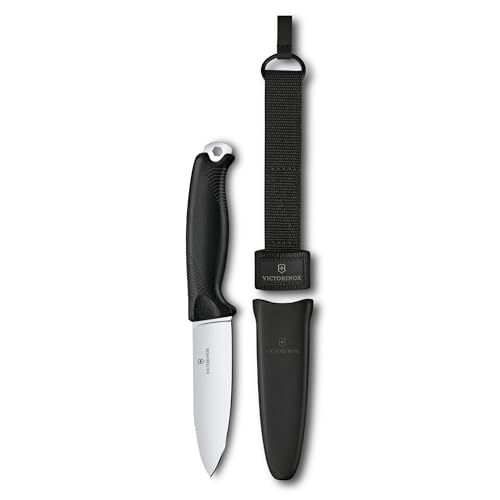
Swiss stainless that slices dinner as well as it carves kindling, with a sharp 90-degree spine for the fire steel. About $75.

At a glance

Product names go to Amazon. Rank numbers jump to the full write-up.

KnifeBest forBladeSteelWeightAbout
1Morakniv GarbergCamping and bushcraft4.3 in, 1/8 in thickCarbon, black coated9.6 oz with sheath$85
2Morakniv CompanionUnder $254.1 in, thinStainless 12C273.9 oz with sheath$20
3ESEE 4Hard use4.5 in, 4.1 in edgeCarbon 1095, coated8 oz knife only$120
4KA-BAR Becker BK2 CampanionSplitting wood5.25 in, 1/4 in thickCarbon 1095 Cro-VanAbout 1 lb$117
5Victorinox VentureStainless, food and fire4.1 inStainless 14C28N5.4 oz$75

Our five favorite camping and bushcraft knives

1Camping and bushcraft
Morakniv Garberg

Morakniv Garberg

A full-tang Swedish knife with a 4.3-inch blade that splits kindling, carves feather sticks and throws sparks off its spine.

$84.99$99.9915% off
Check price on Amazon
Full tang9.6 oz with sheathSpine strikes a fire steelStainless version too
+Read the full write-up

Why I picked it

The Garberg is Morakniv's toughest knife, and it fixes the weak point of the cheaper Moras: their tang is thin and stops partway into the handle. Here the steel runs the full length, so you can drive the blade through a log with a stick (that's batoning, how you split wood without an axe) and pry at a stuck root without worrying. The blade is about an eighth of an inch thick: stout enough for that, thin enough to make fine curls for a feather stick.

The spine is ground square, so a fire steel (a ferrocerium rod that sheds hot sparks when you scrape it) throws real sparks off it, and the black coating keeps the carbon steel from rusting in a damp pack. The handle clicks into the sheath, so the knife stays put when you bend over the fire. A reviewer at The Gadgeteer took it through a dry branch an inch and a half thick and found no chips in the edge afterward.

Who it is for

Campers, backpackers and anyone building a bushcraft kit who wants one fixed blade that does a bit of everything.

What owners report

The knife holds up. Outdoor Life's reviewer has used his for several seasons of hard work and says it's still in strong shape, and The Gadgeteer's reviewer jointed a whole chicken with his. Knivesandtools' reviewer warns that the spine is sharp enough to nick your thumb when you choke up for fine carving, which is the price of a spine that works with a fire steel, and he says it throws sparks every time.

The handle is the complaint. It's hard plastic with no rubber on it: Outdoor Life finds it rough on bare hands and jarring when you baton hard, and The Gadgeteer's reviewer wishes it had the softer rubber grip of the cheaper Moras.

Flaws but not dealbreakers

  • The hard handle feels rough without gloves.
  • The plain plastic sheath is basic. The leather version, and the Multi-Mount version (a sheath with a base and straps that fits a belt or pack webbing), cost about $15 more.
  • Carbon steel rusts at the edge if you put it away wet. Wipe it dry, or buy the stainless version.
2
Morakniv Companion
Under $25

Morakniv Companion

A $20 knife that's sharp, light and stainless, with a grippy rubber handle. The one to start with.

3.9 oz with sheathRubber gripBelt clip sheathMany colors
+Read the full write-up

Why I picked it

For about $20, this is the knife to start with, and plenty of people never move on. The blade is thin, sharp out of the box and stainless, so rain and dishwater don't bother it. The soft rubber grip holds in wet, cold or muddy hands, and the whole thing weighs 3.9 ounces with its sheath, which clips to a belt or a pack strap.

It carves, preps food and scrapes tinder, and Gear Patrol calls it the best budget bushcraft knife.

Who it is for

Backpackers counting ounces, first-time campers, and anyone who wants a spare for the car, the tackle box or a kid's first fixed blade.

What owners report

Owners abuse these and they keep going. M.D. Creekmore, who uses one as his main camp knife, has split mesquite with his and pounded it through wood, and says he has yet to break one; a reader of his has owned five or six over six years and none has failed. The same people are honest about its limits: it feels almost like a toy next to a bigger knife, and it won't chop. Batoning kindling now and then is fine; for splitting every night, the Garberg or the BK2 is the tool. The sheath is the common gripe, cheap plastic that does the job.

Flaws but not dealbreakers

  • The thin blade isn't for heavy chopping or prying.
  • The tang doesn't run the full length of the handle.
  • The plastic sheath feels cheap.
3
ESEE 4
Hard use

ESEE 4

A thick American-made blade built for years of abuse, with a lifetime warranty that even covers the second owner.

8 oz, knife onlyMicarta handleMolded sheath with clipMade in USA
+Read the full write-up

Why I picked it

The ESEE 4 is the knife people buy once. The blade is thick 1095 carbon steel, the handle scales are Micarta (a hard resin-and-cloth composite that grips well) and come off for cleaning, and it's made in the USA. ESEE's warranty covers it for life, doesn't need a receipt and passes to the next owner. Rust and normal wear aren't covered.

Knivesandtools' reviewer found it splits wood without hot spots in the hand and holds its edge through knots. The molded sheath comes with a clip plate, so it rides on a belt or a pack.

Who it is for

Hunters, backcountry campers and anyone who wants a knife they can be rough with for decades.

What owners report

The same Knivesandtools reviewer found it sharper out of the box than most factory edges, and praised the grip. His complaints were specific: the coating drags in the cut and gets in the way of a fire steel until you scrape a patch off the spine, and the handle is short for big hands. A SOFREP writer who saw issued ESEE 4s says the coating started coming off after two weeks of hard use, leaving bare carbon steel to watch for rust.

Flaws but not dealbreakers

  • The coating slows fine carving and blocks sparks until it wears off the spine.
  • The handle is short for large hands.
  • Carbon steel needs a wipe of oil if you camp near salt water.
4
KA-BAR Becker BK2 Campanion
Splitting wood

KA-BAR Becker BK2 Campanion

A quarter-inch-thick slab of steel that splits firewood like a small hatchet. About a pound, and about $117.

About 1 lbRemovable handleFull tangHard plastic sheath
+Read the full write-up

Why I picked it

The BK2 is a pry bar with an edge. The blade is about a quarter of an inch thick and the knife weighs about a pound, so when you baton with it, it splits kindling the way a small hatchet would. The handle scales come off, and the steel is 1095 Cro-Van, a carbon steel with a little chromium and vanadium added, easy to sharpen at camp.

If your survival plan includes building a shelter or processing firewood every night, this is the one that won't flinch.

Who it is for

Car campers and base campers who split their own wood, and anyone who wants one knife that can do the work of a small axe.

What owners report

Owners rate it for batoning, prying and rough camp chores, and the same people say it's too thick to slice food well. The sheath is the most common complaint, a hard plastic one that many owners replace with leather or Kydex, a stiff molded plastic that holds the knife snugly.

Flaws but not dealbreakers

  • About a pound: heavy on a belt and in a pack.
  • Too thick for kitchen jobs and fine carving.
  • The stock sheath is the weak part.
5
Victorinox Venture
Stainless, food and fire

Victorinox Venture

Swiss stainless that slices dinner as well as it carves kindling, with a sharp 90-degree spine for the fire steel. About $75.

5.4 ozSheath doubles as a blow tubeLifetime warrantyThree handle colors
+Read the full write-up

Why I picked it

The Venture is the stainless bushcraft knife that is also good in the kitchen. The blade is flat ground, so it slices a tomato cleanly, and Outdoor Life's reviewer peeled an apple in one long ribbon. The spine is ground to a sharp 90 degrees for scraping tinder and striking a fire steel, and the sheath doubles as a blow tube to get embers going. It weighs 5.4 ounces, and Victorinox covers it for life.

The Venture Pro is the same knife with a fire steel and a few extras in the sheath, for about $40 more; Outdoor Life calls it the most versatile knife in its bushcraft guide.

Who it is for

Campers who cook, paddlers and anyone in a wet climate who doesn't want to think about rust.

What owners report

In Outdoor Life's hands it started a fire in under a minute and batoned better than its thin blade suggests. The one complaint was the sheath: the knife rattled in it on the trail, though it never fell out. Some users say the thin blade bends if you pry with it.

Flaws but not dealbreakers

  • The knife rattles in its sheath while you walk.
  • Not for prying or heavy chopping.

Who this is for

This guide is for campers and hikers who want one good fixed-blade knife in the pack or on the belt: to make a fire in the rain, split kindling, cut cord, cook and fix things. If you mostly need scissors, a can opener and a screwdriver, a multi-tool does more; our camping checklist has the rest of the kit.

A survival knife is part of a kit, not the whole thing. A fire starter, a light like one of these headlamps, water and a way to call for help count as much as the blade.

How to choose

Fixed blade or folding

A fixed blade has no hinge to break and no lock to fail, it's easy to clean, and you can baton wood with it. That's why every knife here is one. A folding knife is lighter and fits a pocket, so it's fine for day hikes, but don't count on one to split wood.

Carving and cooking, or splitting wood

For carving, cooking and fire, a 4-inch blade like the Garberg, Companion or Venture is easier to control. For splitting firewood without an axe, a thicker, heavier blade like the BK2. Long knives like the KA-BAR chop better and carve worse.

Carbon or stainless

Carbon steel is tough, easy to sharpen and throws good sparks, but it rusts if you put it away wet. Stainless needs less care and doesn't mind a wet pack. Coated carbon blades, like the Garberg's, sit in between.

Weight for backpacking and hiking

On your back, every ounce counts: aim for 4 to 10 ounces. The Companion weighs 3.9 ounces and the Garberg 9.6, both with their sheaths. The ESEE 4 is 8 ounces and the BK2 about a pound before you add a sheath, so next to them the Moras are lighter than the numbers look.

The competition

KA-BAR USMC

The Marine Corps knife since 1942 and the classic military survival knife: a 7-inch carbon blade, a stacked leather handle and a leather sheath, about $108 and 11.2 ounces for the knife alone. It chops well, but it's almost a foot long and clumsy for carving and cooking, which is most of what a knife does at camp.

Victorinox Venture Pro

The Venture with a fire steel, tweezers and a pen tucked into the sheath, for about $115. Outdoor Life's pick for fire making. Buy the plain Venture and a fire steel and you save money.

Gerber StrongArm

A full-tang knife with a sheath that mounts several ways, about $110. For about $10 more, the ESEE 4 is the tougher knife.

Benchmade Leuku

Gear Patrol's premium bushcraft knife, in tough CPM-3V steel. About $180 when you can find it, and it's often out of stock.

Fallkniven A1

A Swedish benchmark with a laminated blade, past $200. Very good, and more knife than most campers need.

ESEE 5

The ESEE 4's bigger brother, about a pound and about $175. Too heavy for most camping. The BK2 does the heavy work for less.

Morakniv Eldris

A pocket-size Mora with a 2.3-inch blade, about $30, or about $40 in the kit with a fire starter and a cord to wear it around your neck. Lovely for small jobs, too short to split wood.

How we picked

Fixed bladeBlade of 4 to 5.5 inchesSheath includedAbout a pound or lessRated by a major gear guide or by its owners

Every knife here does the core camp jobs: carving, cutting cord, preparing food and getting a fire going. Reviews from Outdoor Life, Gear Patrol, The Gadgeteer, Knivesandtools, M.D. Creekmore and Crow Survival fill in how each one holds up.

Common questions

What is the best survival knife?+

For most people, the Morakniv Garberg: a 4.3-inch full-tang blade, tough enough to baton and fine enough to carve, for about $85. For hard use for decades, the ESEE 4. On a tight budget, the $20 Morakniv Companion.

What is the best bushcraft knife?+

The Garberg, for its mix of strength and control. Carvers who want a thinner, more slicing blade do well with the Victorinox Venture, and the Becker BK2 is the one for splitting wood. All three are fixed-blade knives.

How long should a survival knife be?+

Four to five inches covers almost everything at camp. Longer blades, like the KA-BAR's seven inches, chop better but are clumsy for carving and cooking. Shorter ones are easy to carry but struggle to split wood.

Is a KA-BAR a good survival knife?+

Yes, it's tough, easy to sharpen and covered for life. It's also long and heavy for camp chores, so most campers do better with a 4- to 5-inch blade and keep the KA-BAR for the truck or the hunting camp.

What's the best knife for hiking and backpacking?+

Something light. The Morakniv Companion weighs 3.9 ounces with its sheath and handles everything a backpacker asks of a knife. If you also want to split wood, the Garberg is worth its extra ounces.

The verdict

Take the Garberg

The Garberg is the survival knife for most campers. It does every camp job a knife should do, and rides on your belt at 9.6 ounces in its sheath.

Pay more for the ESEE 4 if you want a knife for life, or spend $20 on the Companion and you'll still have a knife that does the job.

Related guides