Five daypacks from 20 to 28 liters, about $90 to $180, for a full day on the trail, with a pick for hot days, for fast hikers and for a tight budget.
By Alex HartDay trails mostly, a few nights out a year, mountains when the time allows.
Updated Oct 2026·33 compared
We earn a commission if you buy through our Amazon links, at no extra cost to you. How this worksAmazon prices as of Nov 5, 7:16 AM ET, subject to change. Details
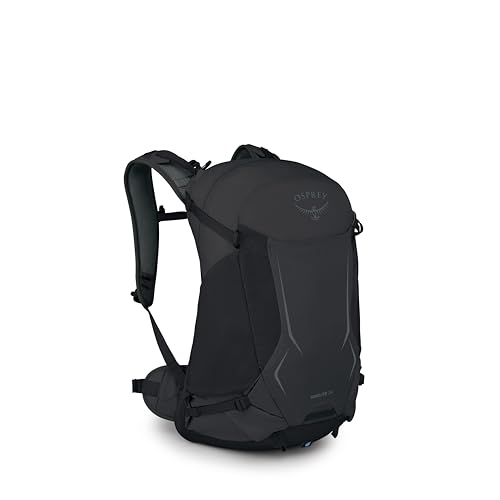
The Osprey Talon 22 is the one I'd carry for a full day on the trail, at about $175. Its padded belt puts the weight of your water on your hips by the afternoon, when your shoulders start to complain, and its zip pockets keep your phone within reach. Women get the same pack as the Tempest 22.
It isn't light, and its foam back runs warm. To carry less, get the Speed Lite Pro: more room, nearly a pound lighter, about $140.
If you sweat through every shirt you own, the Zulu 28 holds a mesh back off your spine, for about $180. Under $100, the Sportlite 20 is about $90.
Two zip hipbelt pocketsTorso 17 to 22 inWomen's version, the Tempest 22No rain cover
+−Read the full write-upHide the full write-up
Why I picked it
Fill a daypack for a real day out, with two or three liters of water, lunch, a rain jacket and a warm layer, and you're carrying somewhere around 15 pounds. On a pack with a plain strap at the waist, all of that hangs from your shoulders. The Talon's belt is padded and wraps your hips, so the weight sits low, and its zip pockets mean you don't stop and unbuckle every time you want your phone or a bar.
The shoulder harness slides up and down the back so you can set it to your torso, from 17 to 22 inches. Stow-on-the-Go lets you tuck your poles under a loop on the strap when the trail turns to rock. There's a top pocket, stretch side pockets for bottles, a sleeve inside for a water bladder, and a clip for a bike helmet if the pack also rides with you to work. Osprey lists it at 2.38 lb.
Who it is for
Anyone who hikes three to eight hours at a time and wants one pack that does all of it, and a pack that also travels. It's also the pick for smaller and larger hikers, since the back adjusts.
What owners report
Owners of the earlier Talon tend to keep it for years. One hiker who used his for five years in Colorado, Longs Peak included, broke a single zipper pull in that time, and Osprey had put a spare in the box. A buyer who carries three liters of water says he doesn't feel the weight, while another found too many little pockets for her taste and learned the hard way that the pack is water resistant, not waterproof.
The 2025 version gets the same praise for how it carries. Better Trail took around 20 pounds through the Picos de Europa without complaint. The two complaints are new. Adventure Alan weighed it at 38.1 oz, against 30.6 oz for the old one, and OutdoorGearLab found its back runs warm, with shirts often damp underneath.
Flaws but not dealbreakers
About half a pound heavier than the Talon it replaced.
The foam back sits against you, so it runs warmer than the mesh-backed packs here.
No rain cover in the box. Osprey sells one separately.
Fit and torso length
One size for the men's Talon, adjustable from 17 to 22 inches of torso, and the Tempest 22 covers 14 to 19 inches.
2
Moving fast, packing light
Deuter Speed Lite Pro 25
More room than the Talon for less money and nearly a pound less on your back, with vest-style straps that hold the load still when you move fast.
Pockets on both shoulder strapsTwo zip hipbelt pocketsFits a 3 L bladderWomen's 23 SL version
+−Read the full write-upHide the full write-up
Why I picked it
This is the pack for the hiker who moves. The shoulder straps are cut like a running vest, with a stretch pocket for a soft flask on one side and a zip pocket on the other, so water and your phone ride at your chest instead of behind you. The pack hugs your back and doesn't bounce on a fast descent, and at about 1.5 lb it weighs nearly a pound less than the Talon while holding three more liters.
Deuter loads it from the top, with a lid pocket, zip pockets on both hipbelt wings, a front zip pocket and loops for your poles. It takes a bladder up to three liters. It costs about $140, and the women's Speed Lite Pro 23 SL costs the same.
Buy it if
You hike fast, scramble, or cover long miles with a light kit, and you'd rather carry less pack than more padding.
Skip it if
Your days mean heavy loads, like winter layers, a big camera or a child's gear. The flexible back steadies the load more than it carries it.
What reviewers found
CleverHiker ranks it among the best daypacks it tried for people who move quickly, and says the vest straps and flexible back keep the load steady even when the pack is full. Its reviewer, on the women's 23 SL, found the S-shaped straps comfortable on a smaller frame. The limits come up in the same places: less support than a framed pack once the gear gets heavy, and one big main compartment with little to split it up. Switchback Travel adds that the 25 is bigger, lighter and cheaper than the Talon 22, and that it can be hard to find in stock.
Flaws but not dealbreakers
One open main compartment. Small things end up at the bottom unless you bag them.
Less support than the Talon or the Zulu past a moderate load.
3
Hot days on a budget
Osprey Hikelite 26
A mesh back that holds the pack off your shirt and a rain cover in the bottom pocket, for about $40 less than the Talon. The belt is the weak part.
Rain cover includedWebbing belt with padded wingsOne size, unisex
+−Read the full write-upHide the full write-up
Why I picked it
On a humid afternoon, the best feature a pack can have is air between it and you. The Hikelite holds its back off your shirt on a tensioned mesh panel stretched over a light wire frame, the same idea as Osprey's $200 Stratos, for about $135. A rain cover lives in its own pocket at the bottom, which the Talon makes you buy separately.
It's 26 liters and 1.8 lb, with a sleeve for a bladder, a front zip pocket, a stretch pocket you can stuff a jacket into, big side pockets and loops for your poles.
Buy it if
You hike in heat and summer storms, and you want the cooler back and the cover more than a padded belt.
What owners report
The belt is where reviewers stop being happy. Better Trail calls it a disappointment next to the rest of the pack, and an Advnture reviewer found it uncomfortable after a long mountain day, and broke the sternum strap early on. Both were writing before the 2026 version, which adds padded wings to that belt. It's still webbing in the middle, not a padded belt. On the other side of the ledger, Advnture says it stayed airy in the heat where other packs soaked the reviewer's back, and Better Trail calls the mesh back and the cover a great value.
Flaws but not dealbreakers
A webbing belt, even with the new padded wings. Past about 15 pounds, your shoulders feel it.
One reviewer's sternum strap broke early.
4
Heavy loads in the heat
Gregory Zulu 28 LT
A wire frame and a mesh back that stands off your spine, so three liters of water and a heavy jacket ride on your hips and your back stays dry.
Carries up to 25 lbTorso 16 to 21 inPhone-size hipbelt pocketsPlus Size version
+−Read the full write-upHide the full write-up
Why I picked it
When the load gets heavy and the day gets hot, this is the pack that carries it best. Gregory hangs the Zulu on a wire frame that runs around the edge of the back, stretches a mesh panel across it, and pairs that with a thick, seamless hipbelt that wraps your hips like a backpacking pack's. Gregory rates it to carry 25 pounds, more than you'd ever want to put in most daypacks.
The 28 LT replaced the Zulu 24 LT, with four more liters and a top that closes with a drawstring under a flap. The hipbelt pockets are big enough for most phones, and the bladder sleeve has a clip to hold it upright. The torso fits from 16 to 21 inches, and there's a Plus Size version with longer straps and belt. At about 2.5 lb it's the heaviest pack here, and that's the frame.
Who it is for
Long, hot days with a heavy pack: a summit with three liters of water, a winter day with extra layers, the hiker carrying the snacks and the first aid kit for the whole family.
What reviewers found
OutdoorGearLab called the 24 LT one of the most comfortable packs it has ever tried, cool on hot days thanks to the mesh back, and its pick for hikes over two hours or loads over 12 pounds. One of its reviewers had hiked and bushwhacked with it for 11 months, with only scuffs to show for it. Better Trail carried about 20 pounds in it comfortably. The complaints are about space, not comfort. The curved back eats into the main compartment, especially with a bladder inside, the bladder clip is too thick for some bladders, and the small top pocket is shallow.
Flaws but not dealbreakers
The curved mesh back takes room from the inside, so 28 liters feels smaller than it sounds.
About 2.5 lb empty, a pound more than the Speed Lite Pro.
Gregory's bladder clip doesn't fit every brand of bladder.
Fit and torso length
One size, from 16 to 21 inches of torso and 28 to 48 inches at the hips. Past either end, the Plus Size version has longer shoulder straps and a longer belt.
5
Spending under $100
Osprey Sportlite 20
A real hiking pack for about $90, with a ventilated back, a place for your poles and a sleeve for a water bladder. It weighs about 1.3 lb.
Webbing belt with padded wingsNo hipbelt pocketsOne size, unisex
+−Read the full write-upHide the full write-up
Why I picked it
For about $90, the Sportlite is a hiking pack rather than a school bag with a hiking label. You get Osprey's ridged foam back with air channels, a webbing belt with padded wings, loops and straps for your poles, a sleeve for a bladder, side pockets and a zip pocket with a key clip. It weighs about 1.3 lb.
Buy it if
Your hikes run two to five hours, your load stays light, and you'd rather spend the difference on boots.
What owners report
The trouble starts when you fill it. A CleverHiker editor carried it fully loaded on an eight-mile hike and came home with a stiff neck and shoulders, and there's no pocket on the belt, so a snack means taking the pack off. Light, it's a different pack: OutdoorGearLab, on the 25-liter version, found it comfortable up to about 15 pounds, and one of its reviewers never felt a sweaty back on a warm, sunny hike.
Flaws but not dealbreakers
No hipbelt pockets. Your phone goes in a side pocket or inside.
A thin belt, so the weight rides on your shoulders once the pack is full.
Who this is for
Every pack above is made for a day on foot: 20 to 28 liters, a belt at the waist, a back that breathes, and enough room for water, lunch, a jacket, a warm layer and a headlamp in case the day runs long. That's the walk to a summit or a waterfall, a loop of five to fifteen miles, a day out from a campground.
If all your daypacks will be Osprey and you want to know which, here's which Osprey daypack to buy, the Daylite and Stratos included. If rain is the main event where you hike, a pack sealed like a dry bag is a better start than a cover, and the waterproof backpacks guide has one built on a proper hiking frame. Once the pack is home, how to pack a backpack shows where the water and the jacket go. If the passenger is your child, you want a framed baby carrier hiking backpack instead, and a daypack for whoever carries the rest. And if you're going overnight with a tent and a sleeping bag, you've outgrown a daypack.
How to choose
How much weight you'll carry
This matters more than the liters. Water is about two pounds a liter, so two liters plus food, a jacket and a first aid kit already comes to 10 to 15 pounds. Under about 10 pounds, a webbing belt like the Sportlite's is fine. Past that, you want a padded belt that wraps your hips, like the Talon's or the Zulu's. Past 20, you want a frame too, and of these packs only the Zulu is rated for 25.
Mesh back or foam back
A foam back (Talon, Sportlite) sits against you, which keeps the load close and stable on rough ground and runs warm on a hot climb. A mesh back on a frame (Hikelite, Zulu) holds the pack a couple of inches off your shirt so air moves behind you, and the curve costs some room inside. One August afternoon on the climb up Mount Pisgah, my shirt was soaked through everywhere the pack touched, and the minute I stopped at the top I was cold. In the humid East, I'd take the mesh.
How many liters
For three or four hours in summer, 20 liters holds water, food and a jacket. A full day, or any day with layers for the top, is closer to 25. Go to 28 or 30 for winter, for carrying a family's share, or if you shoot photos. Bigger than you need is no favor: an empty pack still weighs what it weighs, and a half-empty one lets the load slide around.
Your torso, not your height
A pack fits by the length of your back, from the bump at the base of your neck to the top of your hip bones. The Talon slides from 17 to 22 inches and the Zulu fits 16 to 21; the Hikelite and Sportlite come in one unisex size. If you're small or narrow-shouldered, look at the women's versions, the Tempest 22 and the Speed Lite Pro 23 SL, whoever you are.
The competition
The packs that made the shortlist and stayed off it.
A great pack for long, heavy days, with a mesh back and a padded belt, but about $240 and close to 3.4 lb. The Zulu carries nearly as well for less weight and money.
A comfortable pack with a laptop sleeve and big zip pockets on the belt, at about $160. Its foam back runs warmer than the Zulu's mesh for about the same price.
A framed 20-liter pack that rides close and steady on rough ground, and Better Trail likes it for fast hiking. About $200 for 20 liters is steep, and it ships with a delay on Amazon.
Made from recycled fabric that's stiffer and more water-resistant than plain nylon, with a take-back program at the end of its life. Better Trail found it bulky and uncomfortable past about 15 pounds.
About $80, light and handy, but a city pack: a strap at the waist that carries nothing, and no place for poles. Fine for an hour on the trail, not for a day.
How we picked
20 to 28 litersA belt that carriesA back that breathesAbout 2.5 lb or lessCurrent versions on AmazonAbout $90 to $180
Thirty-three daypacks made the first list. Packs that Amazon doesn't sell, like REI's own Flash and Trail, came off it, along with running vests, city packs and anything much over 2.5 lb empty. Each pack left was judged on what its maker publishes: capacity, weight, back panel, belt, torso range and what comes in the box.
How each one carries over months comes from the long-term reviews at OutdoorGearLab, CleverHiker, Switchback Travel, Better Trail, Adventure Alan and Advnture, critical points first, plus owner reviews of the Talon. Prices come from Amazon and update on this page.
Common questions
What is the best daypack for hiking?+−
For most hikers, the Talon 22: a padded belt with pockets, a back that adjusts to your torso, and 22 liters, for about $175. If you hike hot and carry a lot, the Zulu 28 is more comfortable. If you hike fast and light, the Speed Lite Pro weighs a pound less.
What size daypack is best for hiking?+−
Twenty to 25 liters covers most day hikes: two or three liters of water, lunch, a rain jacket, a warm layer and a first aid kit. Go smaller only for short summer walks, and go to 28 or 30 for winter layers or for carrying a group's gear.
Do I need a hipbelt on a daypack?+−
Under about 10 pounds, a strap at the waist is enough to keep the pack from swinging. Past that, a padded belt is what moves the weight from your shoulders to your hips, which is why the Talon and the Zulu feel lighter than they are by the afternoon.
What is the best small daypack for hiking?+−
The Sportlite 20, at 20 liters, 1.3 lb and about $90, is the small pack that still carries like a hiking pack. Below 20 liters you're into running vests and city packs, and a full day's water and layers won't fit.
Are hiking daypacks waterproof?+−
None of the five is. Their fabrics shed a shower, and the Hikelite comes with a rain cover, but in a long storm water finds its way in at the zippers and seams. Keep your phone and spare layer in a dry bag inside, or look at a waterproof backpack built like a dry bag.
The verdict
Get the Osprey Talon 22
For about $175, the Talon 22 gives you a padded belt with pockets, a back that fits your torso and room for a full day. It carries 20 pounds without complaint, and one owner's earlier Talon lasted five years with a single broken zipper pull.
Spend differently in two cases. In heat and humidity with a heavy load, the Zulu 28 keeps your back drier and carries more. If you hike fast and light, the Speed Lite Pro saves you nearly a pound and about $35.